The End of “I Can’t Code”: How Vibe Coding is Democratizing Game Dev
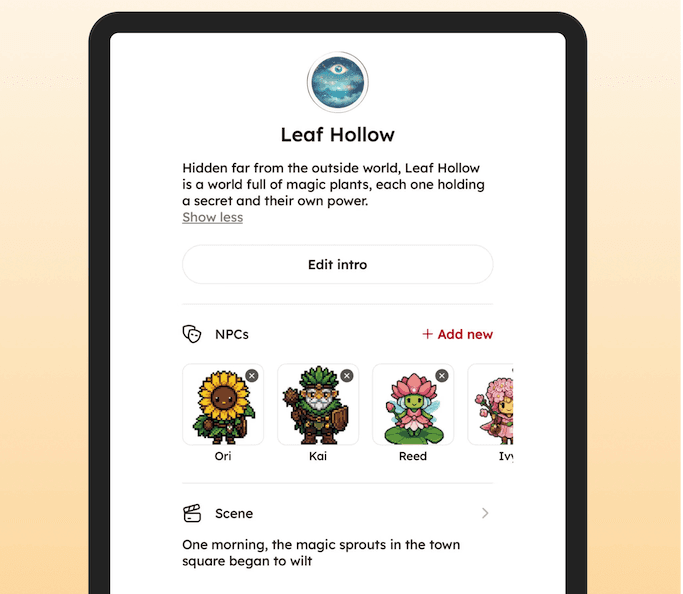
Let’s be real for a second. We’ve all had that “Aha!” moment—a brilliant game idea that feels like the next Among Us or Stardew Valley. You can see the characters, you can feel the gameplay loop, and you’ve already picked out the lofi soundtrack.
Then, you open a tutorial for Unity or Unreal Engine.
Suddenly, you’re staring at lines of C# or C++ that look like ancient hieroglyphics. You spend three hours trying to make a square move left, only to get an “unassigned reference” error that makes you want to throw your laptop out the window. For years, the gatekeepers of the gaming world were the “Coders”—the people who spent years learning syntax while your creative ideas gathered dust in a Notes app.
Well, it’s 2026, and I have some news: The era of the “I Can’t Code” excuse is officially dead. Welcome to the age of Vibe Coding.
What is Vibe Coding? (Hint: It’s Magic)
If you’ve been hanging out in the AI space lately, you’ve probably heard the term “Vibe Coding.” But what does it actually mean for someone trying to build a game?
Traditional coding is about Syntax: knowing exactly where the semi-colons go. Vibe Coding is about Intent: describing the feeling and the logic of the world in plain English (or even just a sketch).
At Redbean, we’ve built the best no-code AI game maker because we believe that the most important part of a game isn’t the code—it’s the vibe. Vibe Coding allows you to act as a Director rather than a Translator. Instead of telling a computer how to calculate physics, you tell your AI agent: “I want the gravity to feel floaty, like we’re on the moon, and when the player jumps, blue sparks should fly out of their boots.”
The AI handles the math. You handle the magic.
Why You Don’t Need to Code to Be a “Real” Dev
There’s this weird myth that if you don’t write every line of code yourself, you’re not a “real” developer. That’s like saying a movie director isn’t a “real” filmmaker because they didn’t personally build the camera.
In 2026, the AI game creation landscape is shifting toward the Creator Economy. Your value isn’t in your ability to debug a memory leak; it’s in your:
Narrative Design: Who are these characters? Why do we care?
Aesthetics: What does the world look like? (Pixel art? Cyberpunk? Ghibli-esque?)
Mechanical Fun: Is the game actually fun to play?
By using a no-code game development platform like Redbean, you’re freeing up 90% of your brainpower to focus on these three things. You’re moving from the “Frustration Phase” to the “Flow State” in minutes.
The Redbean Workflow: From Brain Rot to Playable Build
So, how do you actually build a game without coding? It’s simpler than your morning coffee routine.
Step 1: Manifest the Assets
Use the AI character generator (which we covered in Article 1) to bring your OCs to life. Snap a photo of a drawing, or describe a character, and boom—you have a rigged, playable asset.
Step 2: Set the “Vibe”
Instead of a scripting window, you have a conversation. You tell the Redbean Agent: “This is a horror-comedy platformer. The enemies are giant sentient pineapples. If the player touches one, they turn into juice.”
Step 3: Iterate in Real-Time
The biggest hurdle in traditional dev is the “Compile Time.” In Redbean, you change a prompt and see the result instantly. If the pineapples are too fast, you just say, “Make them move like they’re walking through peanut butter.” Done.
The Social Factor: The TikTok-ification of Game Dev
The reason we’re calling Redbean a social platform for beginner game creators is because making a game shouldn’t be a lonely experience in a dark basement.
Think about how TikTok changed video editing. Before TikTok, you needed Adobe Premiere and a 40-hour course. Now, everyone is an editor because the tools are intuitive and social. Redbean is doing the same for games.
Remix Culture: See a game you love? Hit the “Remix” button. See how they “Vibe Coded” the jumping mechanic, swap in your own characters, change the setting, and publish your version.
Viral Loops: Because it’s so easy to create, you can jump on trends instantly. Made a game about a trending meme in 20 minutes? Post the link on X or TikTok and watch the world play it.
Entering the Creator Era
If you’ve been holding back because you thought you weren’t “technical enough,” this is your sign to stop. The tools have finally caught up to your imagination.
Learning how to build a game without coding isn’t about taking shortcuts—it’s about choosing the right tools for the job. In 2026, the most successful games won’t be the ones with the most complex code; they’ll be the ones with the strongest “vibe.”
Are you ready to stop being a player and start being a maker? The Redbean Agent is waiting for your first prompt.
No code. Just creativity. No cap.