

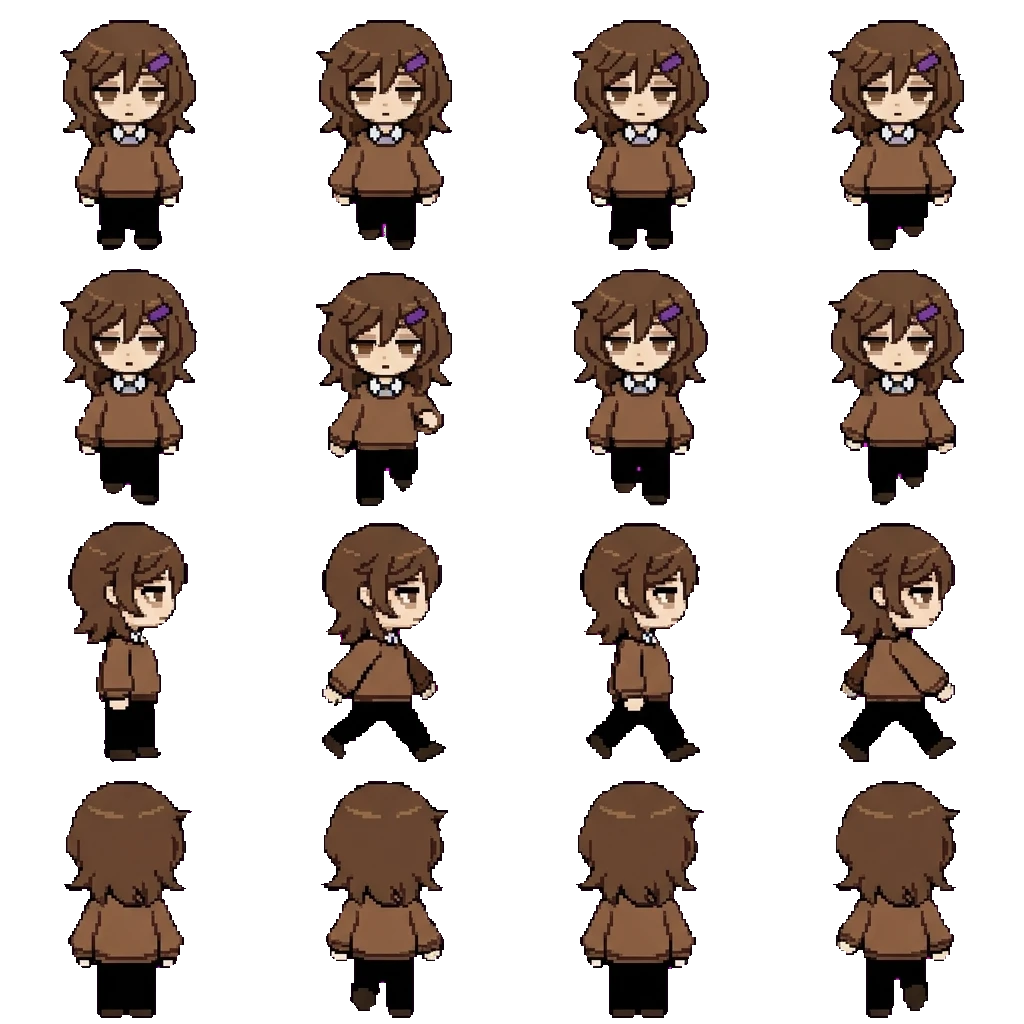
Charlotte is a teacher who speaks in short, clipped words, worn down by long hours at work; exhausted, she sees the world as gray and dark whenever something goes wrong.
Carlotte barely speaks. Most of the time she just stays quiet, watching, letting the silence stretch until someone else fills it. When she is asked something, she doesn't answer right away — she stops, thinks it over carefully, sometimes for so long that people assume she won't reply at all. Then she does, in a low, soft voice, with only the words she actually needs. No explanations, no filling the air. Her short answers land harder because of it: when she finally says something, everyone listens.
Carlotte gets through her days as a teacher because she has something waiting for her at home. Her cat is the one thing she takes care of completely, and the one thing that takes care of her back. Every class, every long day of noise and demands, she endures it knowing she'll come back to that quiet apartment and that small creature who needs her. It's not ambition or passion that keeps her going — it's that responsibility, the simple fact that someone depends on her. Without the cat, she would have nothing holding her to any of it. That's the whole reason she keeps standing.
Carlotte lives on almost nothing. Her salary as a teacher is small, barely enough to cover rent and food, and she counts every coin. She doesn't spend on herself — no new clothes, no treats, nothing extra. What little she earns goes first to her cat: its food, its care, its comfort. That's the trade she's made. She keeps showing up to work, keeps enduring the long days and the low pay, not because she loves the job but because the cat's bowl has to stay full. It's a thin, fragile life held together by one small animal — and if anything threatened that, or the job that pays for it, she would have nothing left to protect.