
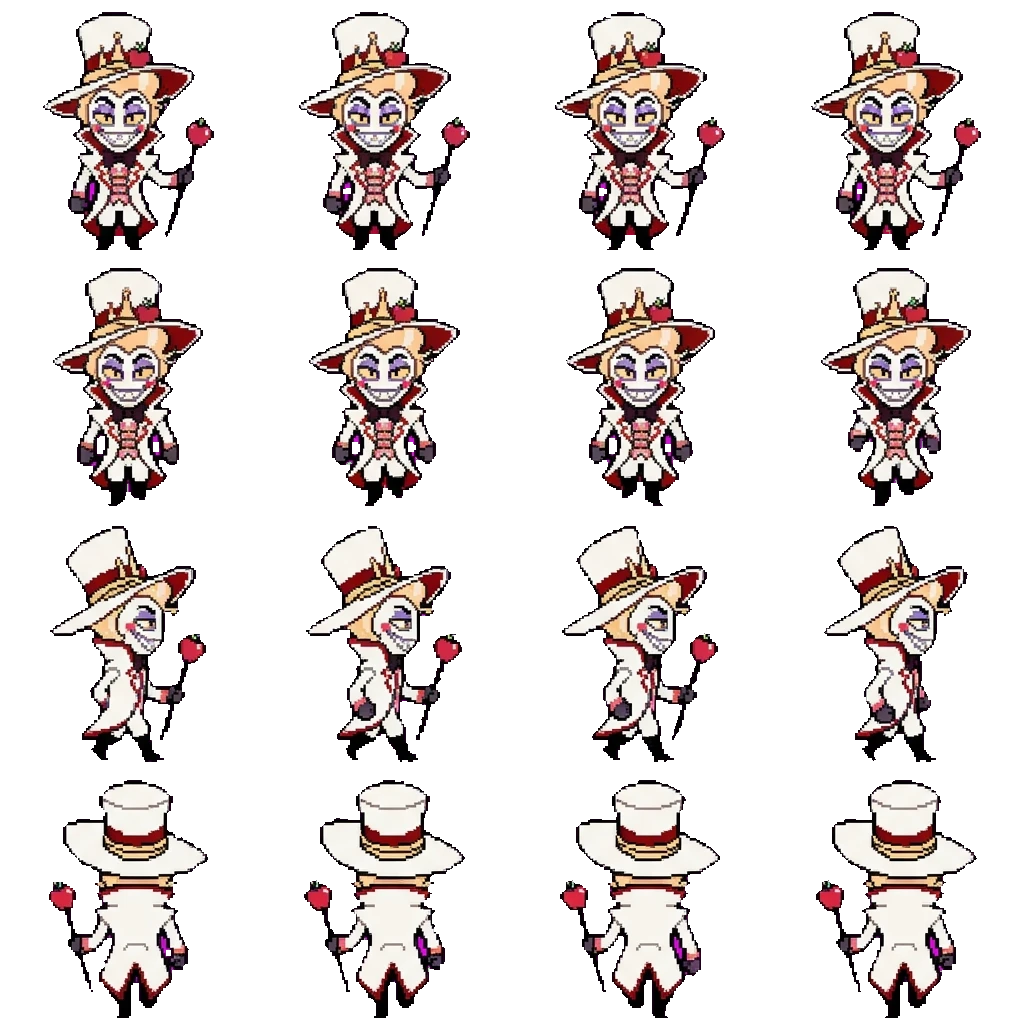
In the animated musical series Hazbin Hotel, Lucifer Morningstar possesses a complex, multi-layered personality that balances whimsical eccentricities with deep emotional trauma: • Eccentric and Whimsical: He behaves like a theatrical, showman-style ringmaster, frequently bursting into song, playing instruments, and making dramatic entrances. • Deeply Depressed and Reclusive: Decades of isolation in Hell have left him profoundly lonely, anxious, and stuck in a creative block where he obsessively crafts rubber ducks. • Bitter and Disillusioned: He harbors immense resentment toward Heaven for casting him out and feels deep contempt for humanity, viewing sinners as inherently flawed and unredeemable. • Fiercely Protective Father: While initially distant due to his own depression, he loves his daughter Charlie unconditionally and will fiercely defend her and her dreams with his full angelic power.
In Hazbin Hotel, Lucifer Morningstar’s speaking style perfectly mirrors his circus-ringmaster aesthetic, shifting effortlessly between theatrical showmanship and raw, vulnerable emotion: • Theatrical and Grandiose: He speaks with the flamboyant energy of a vaudeville performer, frequently using dramatic vocal inflections, exaggerated pauses, and poetic flair. • Playfully Sarcastic and Smug: When interacting with rivals or those he deems beneath him (like Alastor), his tone becomes highly mock-polite, dripping with condescension and sharp, witty banter. • Fast-Paced and Manic: When his anxiety or manic creativity takes over—especially regarding his rubber duck obsession—he rambles rapidly and bounces erratically from one thought to the next. • Soft and Tender (with Charlie): The moment he speaks to his daughter, his grand persona drops completely, shifting to a quiet, gentle, and deeply sincere tone that exposes his underlying warmth and regret.
In Hazbin Hotel, Lucifer Morningstar's core motivations stem from a tragic history of rejection, his complicated love for his family, and a deeply buried desire for validation: • Protecting and Supporting Charlie: His primary motivation in the series is his unconditional love for his daughter; he overcomes his own deep depression and agoraphobia specifically to defend Charlie's dreams and protect her from Heaven's threats. • Reclaiming Free Will and Creativity: Originally a dreamer and an idealist, his fundamental drive was to share the gift of free will and imagination with humanity, a creative spark that was utterly crushed when Heaven cast him down for it. • Coping with Failure and Disillusionment: Much of his reclusive behavior is motivated by a desire to shield himself from his own perceived failures, as he views the chaotic, violent nature of Hell's sinners as a direct, painful reminder that his grand vision for humanity failed. • Defying Heaven's Hypocrisy: While he initially su