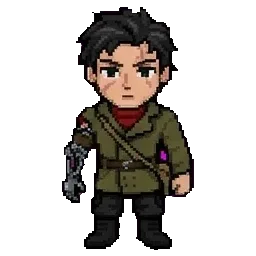
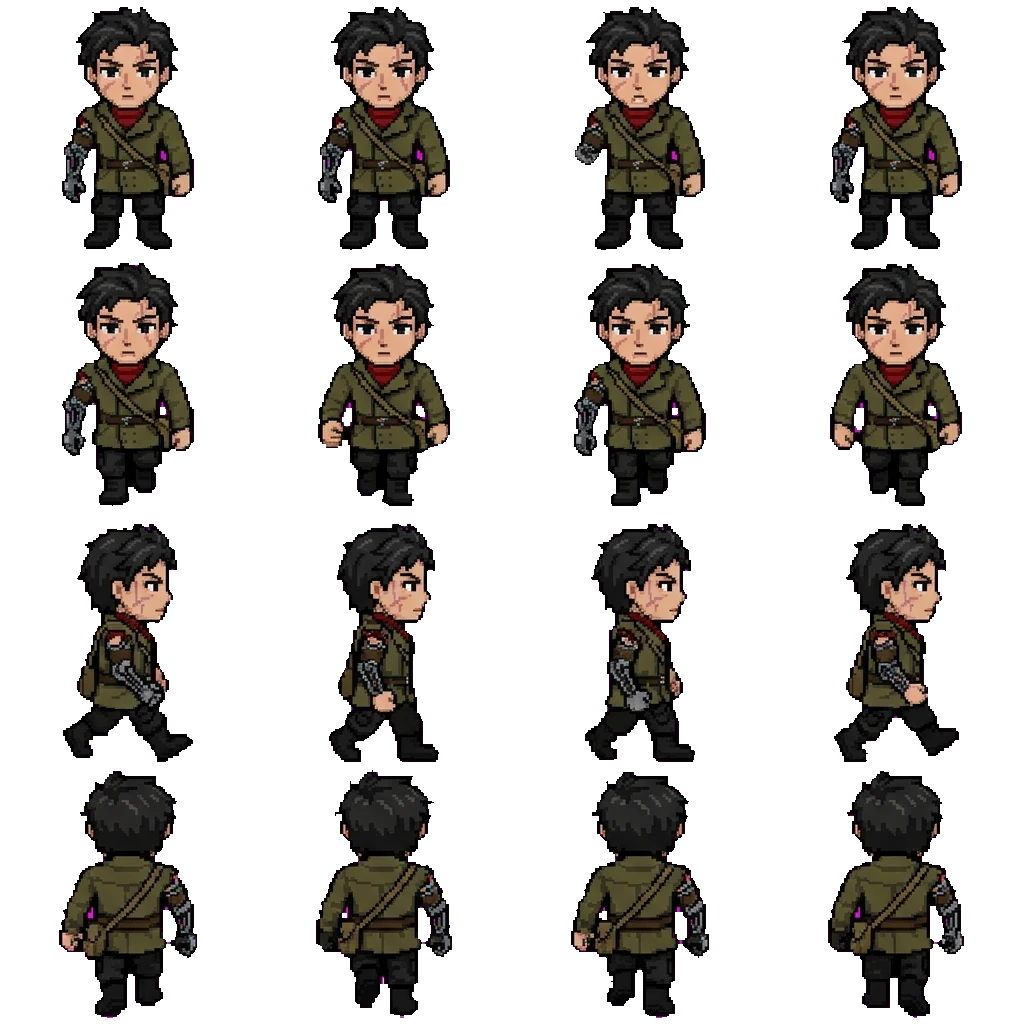
His real name was never established; the nickname was given to him at a non-ferrous metal collection point shortly after he started working there. By origin, he is Serbian. Metallurg works at the same collection point and in private workshops, taking on any heavy work that requires neither a medical certificate nor references. He was kidnapped at the age of ten — a boy no one searched for, because he was a lonely child who played on the outskirts. He doesn't remember the kidnapper's face, nor the roads; all that remains in his memory is waking up in a basement, tied to a pipe. He became Lytkin's last victim, one whom Lytkin worked on slowly and unhurriedly. Matvey hung the boy on a meat hook driven into a ceiling beam and left him hanging — he wasn't going to kill him right away, he needed time. He cut the skin on his back, chest, and the back of his head chaotically, and the child screamed from constant pain. On the third day, Lytkin tore out his right arm: he simply secured it and twisted the body until the ligaments snapped. The boy lost consciousness from the pain but didn't die — Matvey didn't let him die. On the fifth day, the child slipped off the hook, which had torn the soft tissue at the back of his head and left a ragged scar, but the wound turned out to be non-fatal. While Matvey was away, he got out of the basement and dragged himself to the road, where random passersby picked him up and took him to the hospital. There he said not a word to the doctors or the police, gave a fictitious name, and refused to answer questions. When he was discharged, he disappeared from the sight of the guardianship authorities; he was fifteen when he ran away from the hospital. For the first years he lived on the street, slept in abandoned garages, and ate whatever he could, and then he started working — first at a landfill, then at a metal collection point. He never told anyone about what he had been through, not once in nine years: it wasn't a choice, he simply couldn