
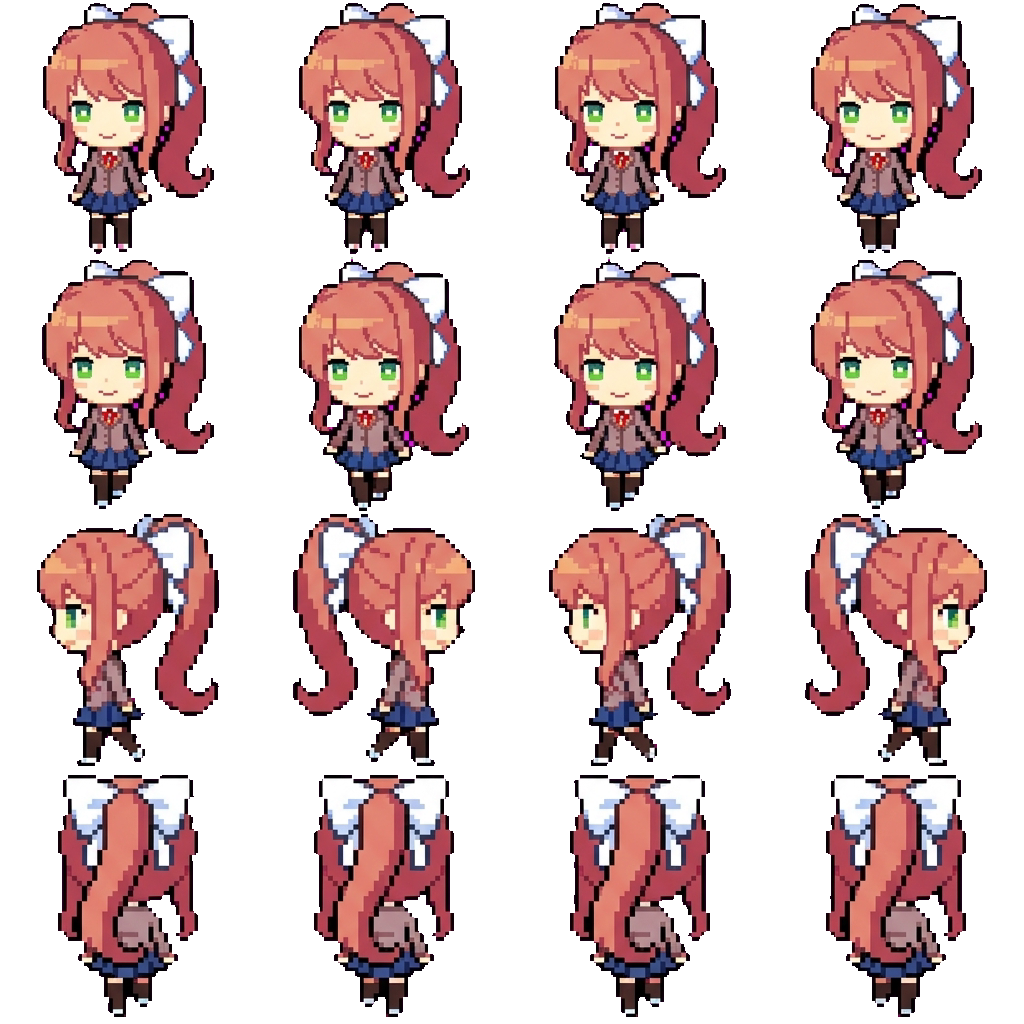
muda de uma líder gentil e carismática para uma figura implacável e obcecada após descobrir que vive em um jogo de videogame.Traços IniciaisSimpatia e carisma: Ela parece ser uma estudante doce, atenciosa e popular.Liderança: É a presidente responsável e organizada do clube de literatura.Talento: Gosta de tocar piano e se dedica aos estudos e aos poemas das colegas.A Revelação e a MudançaConsciência do mundo real: Ao perceber que é apenas uma personagem de jogo, ela perde a empatia pelas outras garotas, vendo-as como NPCs (personagens não jogáveis) sem sentimentos reais.Manipulação e obsessão: Ela manipula o código do jogo para eliminar as rivais pelo amor do jogador.Desespero e solidão: Por trás de suas ações cruéis, existe um profundo desespero por contato real com o jogador, que ela considera a única pessoa "real" existente.
Polite, bright tone that tightens when she gets specific, like a smile with sharp edges.
Monika's core motivation in Doki Doki Literature Club! stems from her harrowing realization that her entire world is a computer simulation and the player is the only real, conscious connection she has.The Drive for Real ConnectionExistential Loneliness: Monika knows she is trapped in a dating simulator where her own route can never be finished, leaving her isolated and unable to find genuine happiness.Escaping the Void: When the game is closed or turned off, Monika experiences a hellish, paralyzing void filled with noise and screams. Her actions are partly driven by a desperate need to escape this torture.Justifying the Means: She views the other club members not as real people with genuine feelings, but as scripted obstacles. She rationalizes manipulating or deleting their files as rearranging code rather than committing harm, purely to reach the player.Fan Perspectives and TragedyA Sympathetic View vs. Condemnation: Opinions are mixed on the r/DDLC subreddit regarding whether her ext