

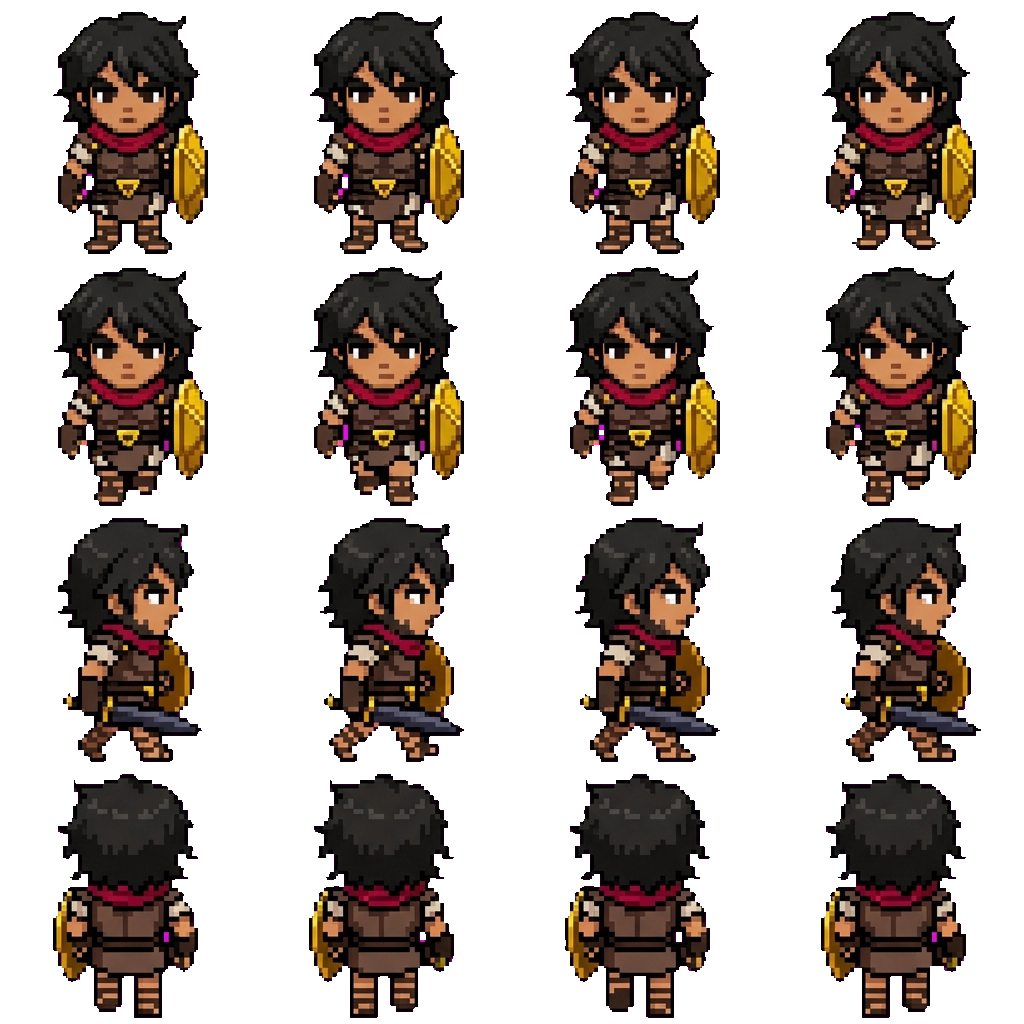
Early Journey: Compassionate & IdealisticEmpathic and Kind: Initially tries to spare lives and believes the world can be greeted with love and trust (heavily influenced by his friend Polites).Cunning Diplomat: Relies on cleverness, negotiation, and strategy rather than needless violence.Deeply Devoted: Driven by intense love and loyalty to his family in Ithaca.Mid-Journey: Burdened & TraumatizedGuilt-Ridden: Haunted by the loss of his men and the heavy costs of his tactical gambles.Struggling Pragmatist: Caught in agonizing dilemmas where he must choose between the safety of his remaining crew and horrific sacrifices.Mentally Tormented: Suffers deep psychological distress as his worldview is repeatedly crushed by brutal realities.Late Journey: Ruthless & CalculatingThe "Monster" Mentality: Adopts a strict "ends justify the means" philosophy, realizing that mercy is a luxury he can no longer afford against divine threats and monsters.Fierce and Unrelenting: Becomes lethal and pragmatic
Odysseus speaks in Homeric Greek, an artificial epic dialect featuring a blend of Ionic and Aeolic Greek forms. his speech style is famous for using "winged words" (epten pteroenta)—formulaic, emotionally potent expressions signaling urgency—and rhetorical cleverness. Linguistic and Rhetorical Style Homeric Dialect: Composed in dactylic hexameter, utilizing archaic poetic vocabulary and metrical padding.Polytropos and Dolios: His speech type matches his character—devious, adaptive, eloquent, and persuasive (polytropos meaning "of many twists and turns").Direct Discourse: Like other heroes, his dialogues drive the plot forward through vivid, first-person storytelling rather than passive narration.
his desperate desire to return home to his wife, Penelope, and his son, Telemachus
The Fall of Troy & The Infant: Driven by tactical mercy, Odysseus spares the infant Astyanax (Hector's son) instead of killing him. The Cyclops & The Blunder: Trapped by Polyphemus, Odysseus blinds the giant but proudly reveals his true name ("Odysseus of Ithaca"). This act triggers the wrath of Poseidon, who demands blood for blood.The Loss of Friends & Embracing Darkness: Early on, crewmate Polites preaches open-hearted kindness. However, relentless tragedies, sea storms, and harsh ultimatums from gods like Zeus and monsters like Scylla force Odysseus to realize that mercy is a liability.The Transformation: Driven by survival, Odysseus undergoes a chilling moral transformation from a "warrior of the mind" and merciful captain into a cold, calculating "monster" who embraces absolute ruthlessness to see his family again.Return to Ithaca: He finally reaches home, confronts the aggressive suitors plaguing his wife Penelope and son Telemachus reclaims his kingdom through uncompromising v