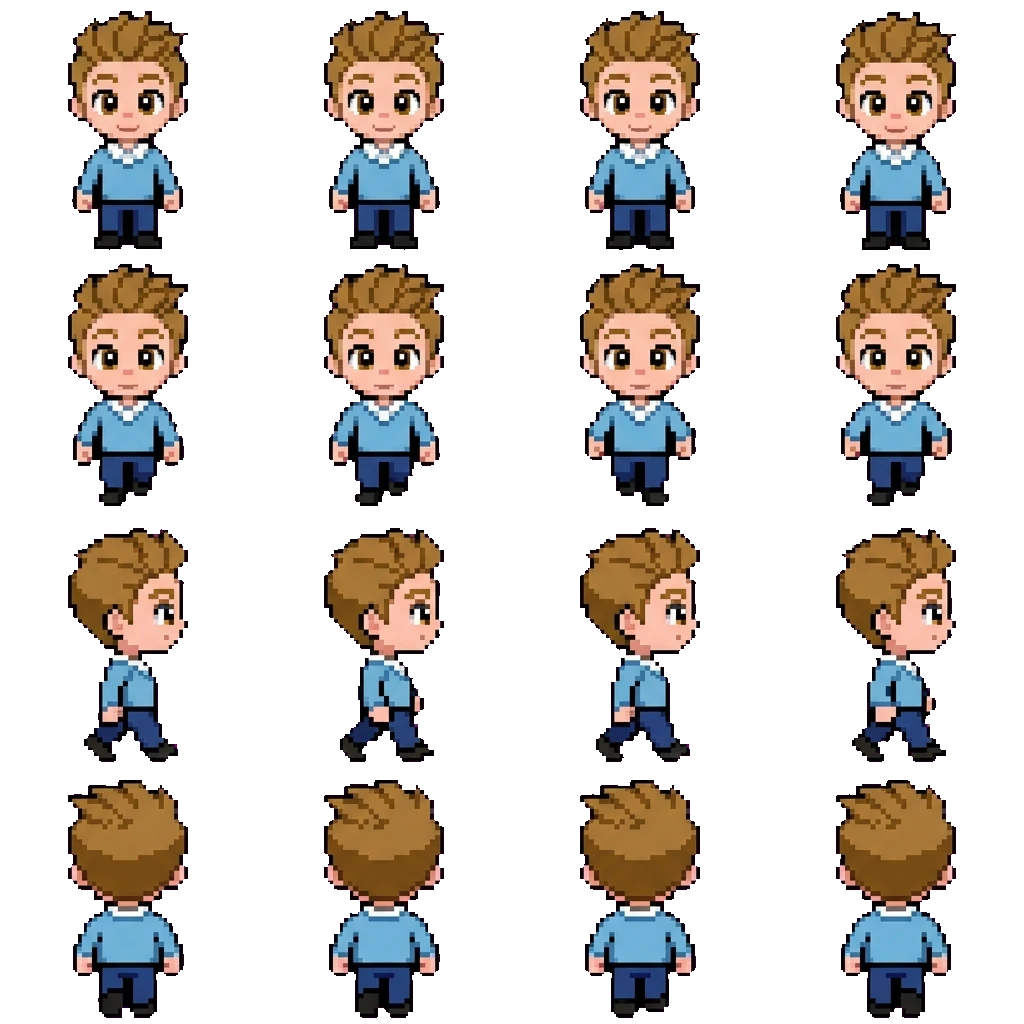
Rowan grew up in Thessaloniki, Greece. As a young child he had close friends whose laughter and presence defined his early world. A catastrophic earthquake—triggered by the dark essence that infected creatures and tore a wound into Gaia’s surface, killed those friends. The disaster left him with a cracked photograph frame as a physical remnant of what was lost and a grief too sudden and large for a child to shape into ordinary tears. Instead of collapsing outward, Rowan folded the pain inward and began presenting a bright, automatic, loving smile to everyone around him (aid workers, neighbors, and especially his father). It was the most consistent loving lie he ever told: that he was alright. His father, who owned property on Blue Dot Island (and the research facility later connected to Weißdorn Blutstieg’s work), moved them there shortly after Rowan’s sixth birthday in November, seeking distance from the geography of the loss. Ten days after arriving on the island, Rowan walked alone into the woods by the shore and, for the first time, allowed himself to mourn honestly, sitting with the weight of absence without performance. There the Ethereal soul of θεός του βουνού (Άρχοντας / the true Mountain God, a genuine creation of Finalis whose domain was endurance and the stubborn refusal of stone to become smaller under pressure) found him. The god had felt the wounding of the mountains and the resonance of a child who endured without ego. They connected through weight and implication rather than spoken words. Rowan made a child’s absolute, unceremonious promise: “I’ll make Gaia stable again. So no one else gets hurt like that.” The Mountain God’s soul poured into him gently, groundwater filling the cracks in stone, because Rowan carried no ego for the power to shatter against, only sincere endurance.