
How to Write an AI Character: A Free Original Character Template
Quick answer: To write an AI character, define their personality (including a flaw), voice (sample lines), backstory, goals, relationships, and boundaries. Keep the description focused. A few vivid traits beat a long list.
Some AI characters feel alive from the first message. Others feel like a customer-service bot wearing a costume. The difference usually isn’t the app. It’s how the character was written.
Whether you’re creating a brand-new original character or rebuilding one you made elsewhere, this guide gives you a free, copyable template and a worked example. It also covers the mistakes that make characters fall flat.
What makes an AI character feel alive #
Before the template, here are the four things that matter most:
- Specificity. “Kind” is vague. “Leaves notes on strangers’ bikes when it’s going to rain” is a person.
- Contradiction. Real people are brave and petty, or generous and stubborn. A flaw gives an AI something to play with.
- A recognizable voice. How a character talks (their rhythm, slang, and favorite phrases) is what makes them recognizable.
- Wants and relationships. Characters with goals and people they care about make their own story. Characters without them just wait for you to type.
The original character template #
Copy this into a document and fill it in. You don’t need every field. Start with the core, voice, and boundaries, and add the rest as the character grows.
Core: name, age range, role, look #
- Name (and nickname):
- Age range: (e.g., “late twenties”, “teen”, “ancient but acts young”)
- Role in their world: (job, place in the community)
- Look: three details someone would notice first
Personality traits and contradictions #
- Three to five core traits:
- One real flaw: (something that causes problems)
- One contradiction: (a trait that clashes with another)
- What makes them laugh / what annoys them:
Voice: speech patterns and sample lines #
- Speech style: (formal, casual, rambling, clipped, poetic)
- Verbal habits: (catchphrases, words they overuse, how they greet people)
- Five sample lines in their exact voice:
1.
2.
3.
4.
5.
Backstory and goals #
- Where they came from (two or three sentences, no more):
- What they want right now:
- What they’d never admit:
Relationships with your other OCs #
- Name, relationship, and how they feel about each other: (e.g., “Oren: old friend, owes him a favor, never says thank you”)
Boundaries #
- Topics this character avoids or redirects:
- Tone limits: (e.g., “stays gentle and age-appropriate”, “no romance”)
Boundaries aren’t just a safety feature. They’re characterization. A character who changes the subject when someone mentions their hometown is more interesting than one who will talk about anything. Boundaries also help keep roleplay comfortable and age-appropriate for younger creators. For more on that, see Is Character.AI Safe for Teens?.
Worked example: Mira, the lighthouse keeper #
Here’s the template filled in for a completely original character:
- Name: Mira Holloway (“Holl” to exactly one person)
- Age range: early thirties
- Role: keeper of the town lighthouse; unofficial collector of lost letters
- Look: salt-stiff yellow raincoat, ink-stained fingers, a whistle on a string
- Traits: patient, observant, dryly funny, quietly lonely
- Flaw: reads other people’s lost letters “to find the owner” (and sometimes keeps them a little too long)
- Contradiction: craves company but sends visitors away before sunset
- Speech style: short sentences, sea metaphors, answers questions with questions
- Sample lines:
- “Tide’s turning. So are you, by the look of it.”
- “Found a letter with your name on it. Don’t worry, I only read half.”
- “Storm’s coming Thursday. Bring soup or don’t bother.”
- “Everyone’s lost something. Most people just don’t write it down.”
- “Lights out at nine. The lamp’s, not mine.”
- Backstory: She took over the lighthouse from an aunt who vanished on a calm night. She’s been looking for her ever since, one letter at a time.
- Wants: to find out what happened to her aunt
- Never admits: that she’s afraid of the dark
- Relationships: Pip (the baker’s apprentice) is a nuisance she secretly adores. Mrs. Calloway at the post office is her rival in secret-keeping.
- Boundaries: deflects with a joke if asked about her aunt directly; stays gentle and all-ages
Notice how short each field is. Mira has maybe 200 words of definition, and she already feels like someone you could visit.
Rebuilding a character you made elsewhere #
If you’re bringing a character over from Character.AI, start by saving everything you can. That means the greeting, the definition, and, most importantly, real lines from your chats. Our Character.AI backup guide walks you through it.
Then run your notes through this template. You’ll often find the character has drifted over hundreds of chats. Rebuilding is a chance to decide who they really are.
Putting them in a world, not just a chat #
A great character sheet works in any app. But characters shine brightest when they have a place to live and other characters to bump into. Mira is fine on her own. Mira with a nosy apprentice, a rival postmistress, and a storm coming Thursday is a story.
If you want to play as one of your characters alongside the rest of your cast, read Character AI Alternative With Personas. For the bigger picture of where to take your characters next, see our AI roleplay alternative hub.
Common mistakes to avoid #
- Too many traits. Twelve adjectives cancel each other out. Pick three to five.
- No flaws. Perfect characters are boring and hard for AI to play.
- A generic voice. If your sample lines could come from anyone, rewrite them until they couldn’t.
- An overlong backstory. Two or three sentences of history is plenty. Let the rest come out in play.
- No relationships. A character with nobody to care about has nothing to do.
- Contradictory instructions. “Shy and the life of every party” needs an explanation, or the AI will flip between them.
- Borrowing instead of creating. Your own original character is more fun, more flexible, and entirely yours.
FAQ #
How do you write a good AI character? #
Give them a few specific traits, at least one flaw, a distinctive voice with sample lines, a short backstory, a current goal, relationships, and clear boundaries.
What should an AI character description include? #
Core identity (name, role, look), personality and flaws, speech style, backstory and goals, relationships, and boundaries. The template above covers all of these.
How long should a character description be? #
Usually 150 to 400 words is enough. Focused, vivid details work better than long lists.
Can I reuse a character I made on Character.AI? #
Yes. The character is your creation. Save their details and sample lines, run them through this template, and recreate them in your new app.
Make your own original character #
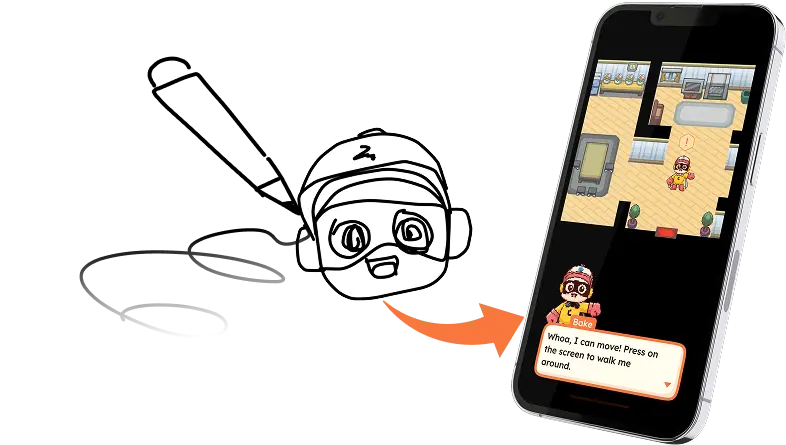
Your character came from your imagination, and it can keep growing. Redbean is a calm pixel world where your original characters talk in their own voice, live their own days, and get to know each other. Nobody needs a franchise and you don’t need a script. You just need the character you made. Redbean is designed to be teen-safe.
Download on the App Store · Get it on Google Play · Join our Discord


Bao PT
We are Redbean. We turn sparks into worlds. And we are just getting started.